About
Built to Serve. Wired to Lead.
Decades of range across business operations, production, sound, property, and the sea — with the same instinct underneath: go deep, do the work, keep it running.
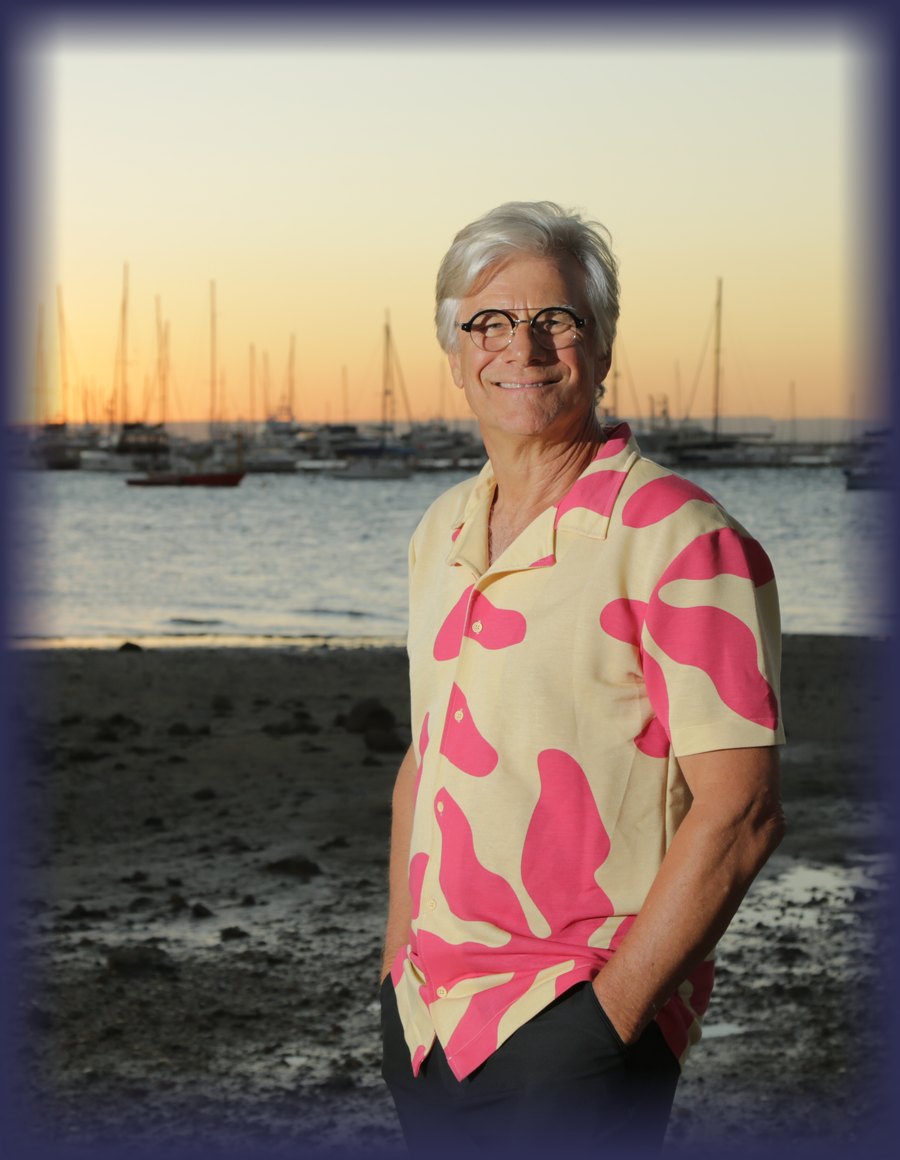
Decades of range across business operations, production, sound, property, and the sea — with the same instinct underneath: go deep, do the work, keep it running.
A career that starts in music — on stage, then in the recording studio — and runs on through cutting dialogue for film and television, building the software a publisher ran its royalties on, running a French country estate, or captaining a cruising sailboat, can look like several separate lives.
The constant is simpler than it looks: in every one of them, I'm the person who makes it run. I go deep on the tools, learn how a thing operates, and either do it well myself or lead the people who do. I've co-founded and run a company, captained my own vessel, and managed remote operations solo — I can lead, and I have. But I lead the way I work best: hands-on and close to the work, not removed from it.
Give me a system to run or a problem to solve, and I go deep, learn what matters, and deliver — whether that means leading a team and a budget or doing the work with my own hands. I've run a business and a boat; I've also been the specialist at the bench. What stays constant is that I'm dependable, self-directed, easy to work with, and I own the outcome from the first day to the last.
For seven-plus years I was owner-captain of a 40-foot monohull, living aboard full-time on the Sea of Cortez and Mexico's Pacific coast — responsible for the boat, the crew, and every system that kept us safe and moving. On a long coastal passage, when something breaks there's no one to call; you diagnose, repair, adapt, and keep going. What began as a way of life is now the direction I'm pursuing, with the professional certification to match.
At a small publishing company I helped start, I did two very different hands-on jobs. I produced and mastered the podcast episodes and audiobooks — narration editing, mixing, mastering, QC, the lot — and I designed and built the royalty-management system the business used to report royalty earnings to its authors for 6+ years. I taught myself AI-assisted programming to create a second-generation version of the system.
Whether passing Quebec's real estate licensing exam in French (English is my mother tongue) with an 83% score, negotiating residential leases in Spanish across several Mexican states, or running an 18th-century, 20-hectare estate in France while the owners were abroad, the method never changed: learn the rules, do the work, keep it running.
Sound has almost always been the through-line: dialogue, SFX, Foley, and music editing across 300+ television episodes and 10 feature films. I also coordinated large-scale AAA video-game production at Ubisoft — teams of up to 160 people, under real deadlines, on titles including Splinter Cell, Prince of Persia, and Myst — production experience I'd bring back to entertainment production or studio operations, paired with the technical depth to know exactly what the people doing the work need.
Before any of it, I was a working musician — saxophone and vocals — and then a recording engineer, working on sessions for artists including Leonard Cohen, Céline Dion, the Bee Gees, and Pat Metheny, in New York and Montreal, alongside producers like Arif Mardin and Russ Titelman. That's where the technical side started too: I was a product specialist on some of the first computerized audio-editing and console-automation systems, working closely with the engineers and product teams behind them.
Music is still an active thread: I compose for multimedia today, including the score for the immersive audiobook Nova: The Courage to Rise.
For years, home floated. These days the ocean is mostly a view rather than an address, and the closest thing to a crew is a cat or two supervising from the nearest warm surface.